Original Research: How Streamers Are Using Video to Fix Content Discovery

By Martin Prins, Head of Product @ Media Distillery
Content discovery is one of the hardest problems streaming services face today. Video libraries are deeper than ever, competition for attention is intense, and viewers are increasingly impatient. Too often, finding something to watch can take longer than actually watching it! When that happens, frustration grows. And churn isn’t far behind.
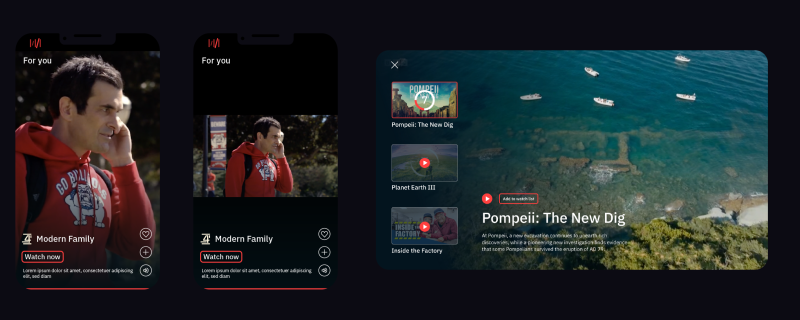
Many service providers are turning to video-first discovery experiences to help shortcut this process, making browsing faster, clearer, and more intuitive. Short-form video formats including trailers, promos, highlights, and preview snippets are increasingly woven into both the core streaming platforms - as well as being used to further off-platform discovery on sites like YouTube, Instagram, and TikTok.
But is there a “best practice” for video-first discovery? To better understand how this shift is playing out in practice, I set out to survey how a range of global and regional streaming services use video on their home screens — the starting point for most viewing journeys. This wasn’t an exhaustive study, and experiences vary by device, region, and moment in time. But taken together, we find patterns of experimentation and lessons that others can learn from those choices.
Media Distillery’s Survey Of Video-First Content Discovery
In my review in the closing days of 2025, I looked primarily at home pages and home screens across web and TV experiences, paying particular attention to row-based layouts and whether video previews were used consistently across rows or reserved for specific placements. I also noted the type of video being used (trailers, promos, highlights, previews), where it appeared in the UI, and how long those clips typically ran.
What quickly became clear is that while implementations vary widely, video itself is now a common discovery tool across the industry.
The Big Leagues: How Netflix, Amazon, YouTube Etc. Use Video In Discovery
Among the global streaming leaders:
- Netflix combines trailers, promos, and highlight clips in a video-first home experience for most content. They play either in the top banner or thumbnail window, with durations ranging from 50 seconds to several minutes. Among global SVODs, it represents the clearest shift toward video-led discovery. Even for video games, they utilise preview videos to give viewers a glimpse of gameplay.
- Amazon Prime Video blends promotional clips for originals with highlights for selected content, with clip lengths ranging from 15s to several minutes.
- HBO Max follows a similar model for originals (promos and trailers of 35-45s), but only shows static thumbnails for most assets.
- SkyShowtime shows promos/trailers and video previews on the front page, with lengths ranging from 65 to 145s.
- YouTube plays videos inside the thumbnail window on hover/select. It plays the video from the start until about 30-45 seconds (excluding the Shorts section).
The View From Europe: How Regional Services Do Video-Based Discovery
Norwegian broadcaster VGTV uses a compilation of 1-second excerpts stitched into a 10-second clip, which they show in the top row. Other rows only show thumbnails.
VTM Go in Belgium shows a single promo preview video for one of its programs — a 30-second compilation of short clips.
Similarly, German / French service Arte sometimes - but not always - shows a 30-second trailer for a documentary in the top row. I noted that posters are still sometimes shown here.
Obviously, I couldn’t complete my survey without looking at how one of Media Distillery’s own customers operates in this area. Switzerland-based Sunrise offers a combination of promos, trailers, and highlights in its “TV Highlights” feature, shown in the top row and a dedicated highlights row. For their catch-up/replay content, our solution automatically generates spoiler-free video previews from live broadcasts across 50 channels in 4 languages. These preview clips are 15 to 20 seconds long.
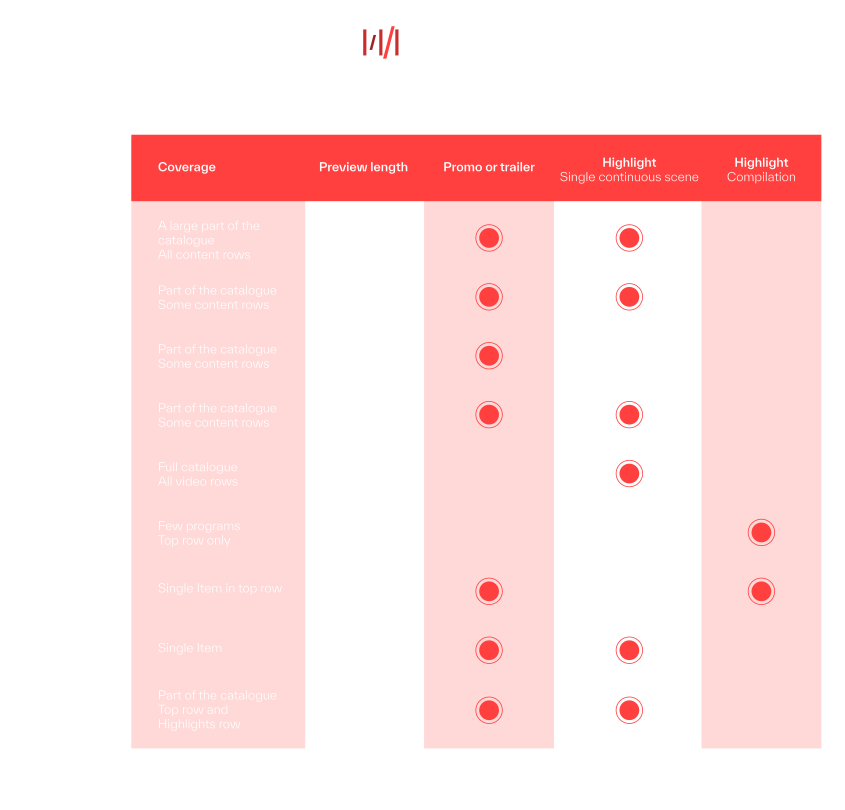
The table below summarises these findings:
Vertical Video: Social Media’s Influence On Streaming Apps
Alongside the broader move toward video-led discovery, another shift is becoming increasingly visible: the rise of vertical video inside premium streaming services. While this format has long been associated with social platforms like TikTok and Instagram, its appearance in streaming apps signals how strongly mobile-first viewing habits are now influencing discovery design.
For example, Disney+ recently announced its intention to add vertical videos “in a variety of ways across categories and content types, for a personalized and dynamic feed” with the goal of “turning Disney+ into a must-visit daily destination.”
It follows CNN’s announcement in late 2025 that it’s vertical videos in its flagship app:
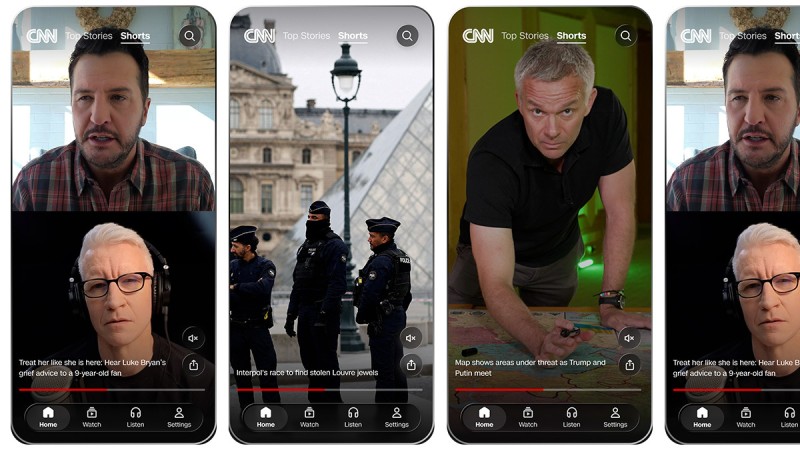
Image credit: CNN's vertical 'Shorts'
These examples reflect a deeper behavioral shift. Younger audiences, in particular, are increasingly comfortable using short, snackable videos to decide what to watch next. Research shows that many viewers — especially Gen Z — regularly discover shows through short-form video before watching them in full. In this context, vertical video isn’t about copying social feeds inside streaming apps; it’s about creating a discovery process that resonates with how users are already engaging with content.
Key Takeaways For Those Planning Video-Centric Content Discovery
As video-first discovery becomes the standard, what lessons can streaming services learn from leaders in this space to adopt it effectively?
1.Don’t rely solely on hero content. Many services focus their video efforts on showcasing high-profile content. While this makes sense for branding and promotion (especially when resources for generating clips are limited), offering previews for a broader range of content is key to improving overall discovery and utilization of your full content catalogue. Whether it’s a series, a documentary, or even a niche genre, video previews help viewers make quicker decisions. This reduces frustration, and - ultimately - leads to increased viewing.
2.Optimize content for different devices. For many audiences, viewing is mobile-first. If you’re not optimizing its discovery experience for mobile viewing experiences, you’re likely missing out. Vertical video and short-form previews are inherently mobile-friendly, leveraging the same UI patterns that users are familiar with on social platforms. Even for large-screen experiences, mobile-first design thinking can translate to a more streamlined, intuitive browsing experience.
3. Experiment with length and placement. As the survey shows, there is no “golden standard” for the optimal preview video length. That means you’ll need to experiment and iterate to find the length(s) that work best for your content and your viewers. Iterate on that. Today, most services concentrate their video previews in high-impact areas such as banners or featured rows, while relying on static imagery elsewhere. That’s a great place to get started, but again, you need to experiment and gather real user data on where short-form videos work best for your service.
4. Use AI to scale preview generation. Automation enables you to efficiently scale video discovery to all your content, something impossible only a few years ago. Services are no longer constrained by the capacity of the editorial team to generate trailers, promos or previews for just a few assets. Using an AI-powered solution, like Media Distillery’s Preview Distillery, will ensure that even your deep archive content can be found - no matter how large your catalogue. That means you maximize content ROI while giving your team time to focus on what matters most. Be sure to work with a partner that allows you to effectively balance automation with editorial control.
Ready To Elevate Your Content Discovery?
Learn more about how short-form previews and automated video chaptering can tackle decision fatigue in our Content Discovery Playbook.
If you’d like to speak to our experts about how we’re helping leading streaming services to efficiently put video at the heart of their content discovery experiences, contact our team to set-up a meeting.